
Continuously variable transmissions (CVT transmission or CVTs) are increasingly common in cars today, from compact sedans to SUVs. If you’re purchasing a vehicle or researching pre-owned options, understanding CVT transmissions, their fuel efficiency benefits, potential reliability issues, and maintenance tips can save you money and time. This guide covers essential points buyers should know about CVTs, how they differ from traditional automatic transmissions, and what to look for when test-driving or inspecting a used car.
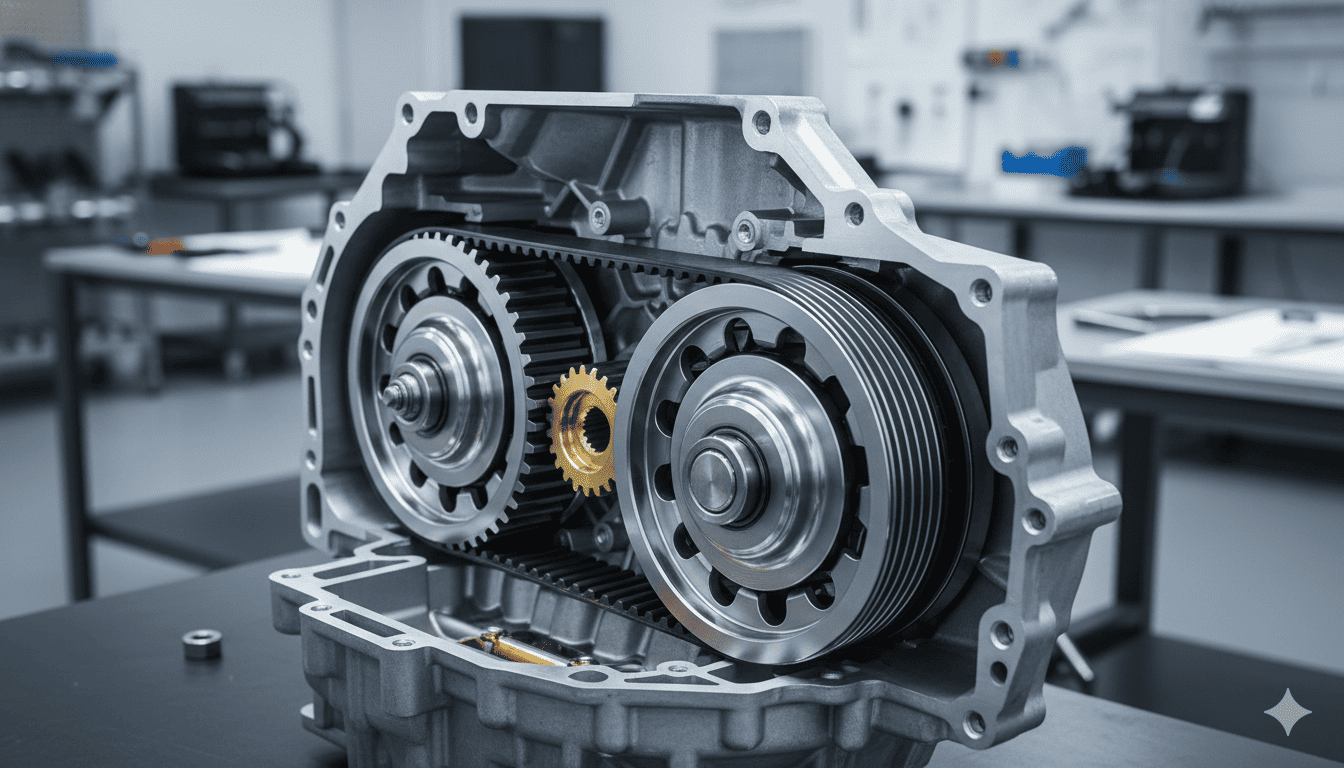
What is a CVT transmission, and how does it differ from a traditional automatic?
A CVT transmission uses a belt and pulley system instead of fixed gear sets found in a traditional automatic transmission. Unlike a geared automatic or manual transmission with a number of gear ratios, CVTs offer an infinite number of gear ratios by varying pulley diameters, which allows the engine rpm to stay in an efficient band. This transmission design helps improve fuel efficiency and provides smoother acceleration since there are no distinct gear changes.
Standard automatic transmissions and geared automatics rely on sets of gears and often a torque converter; CVTs use a belt-driven or chain-driven pulley system that adjusts continuously. That difference in transmission design also means CVT fluid and maintenance needs differ from regular automatic transmissions. Understanding CVT transmissions helps car buyers weigh fuel economy benefits against potential long-term reliability and maintenance considerations.
How do CVTs improve fuel efficiency compared to regular automatic transmissions?
CVTs are designed to keep the engine at the most efficient engine speed for a given load, which often results in better fuel economy compared with a standard automatic transmission. Because CVTs can hold the engine at lower or optimal rpm and avoid inefficient gear changes, many car manufacturers use CVTs in fuel-efficient models to improve fuel economy—especially in compact cars and crossovers.
Improved fuel efficiency is one reason auto manufacturers like Nissan, Honda, and Toyota have adopted CVTs in many newer models. However, real-world fuel efficiency gains depend on driving habits, commute type, and maintenance. Heavy loads, towing, or aggressive acceleration can reduce those efficiency benefits, and in some cases, a geared automatic may be a better choice for high torque applications.
What are common transmission problems with CVTs and how do they present?
Transmission problems in CVTs can appear as juddering, slipping, overheating, or strange noises. Because CVT operation relies on precise pulley alignment, belt condition, and CVT fluid, issues like low fluid levels, contaminated CVT fluid, or overheating can lead to premature wear or failure. Symptoms such as hesitation under acceleration, surging at steady speeds, or abnormal engine rpm behavior are warning signs to investigate.
Some models have known reliability issues that caused owners to report premature CVT lifespan or repeated repairs. When buying a used car, check for service history indicating regular fluid changes with the correct CVT fluid, documented repairs, and whether the vehicle has experienced overheat events. A pre-purchase inspection by a mechanic familiar with CVTs can reveal underlying transmission problems before you buy.
How long is the typical CVT lifespan and what affects longevity?
CVT lifespan varies by make, model, driving conditions, and maintenance. With proper care—regular fluid changes using manufacturer-specified CVT fluid and attention to fluid levels—many CVTs can reach longevity comparable to regular automatic transmissions. Factors that affect CVT lifespan include high torque use, frequent heavy loads, overheating, and neglected maintenance, all of which can shorten the CVT lifespan or cause premature failure.
Mileage is a key indicator; a well-maintained vehicle with high mileage and documented maintenance may still have a long CVT lifespan ahead. Conversely, vehicles with inconsistent service records or signs of overheated or burned CVT fluid should raise concerns. Understanding CVT transmissions and the recommended service intervals helps buyers estimate expected longevity.
Which car manufacturers use CVTs and which models should buyers watch?
Nissan, Honda, and Toyota are among the most common manufacturers using CVTs in their lineups, especially in fuel-efficient models and compact SUVs. Nissan popularized CVTs widely across many models, while Honda and Toyota offer CVT-equipped trims in sedans and crossovers. Many newer models from these car manufacturers feature CVTs to improve fuel efficiency and reduce emissions.
When buying a vehicle with a CVT, research model-specific reliability reports and service bulletins. Some older examples (e.g., certain Nissan models in the past) faced reliability issues that led to revisions in later models. Always check the specific honda models or toyota variants you’re considering and look for updated CVT designs or recalls addressing previous transmission problems.
What maintenance tips should owners follow to keep a CVT running smoothly?
Regular maintenance is essential for prolonging CVT lifespan. Follow manufacturer-recommended intervals for CVT fluid changes and use the correct CVT fluid, as standard automatic transmission fluid may not be suitable. Keep an eye on fluid levels and signs of contamination or burning; a fluid change can often prevent transmission problems and help avoid overheating or clutch/belt wear.
Other maintenance tips include avoiding aggressive launches, limiting towing or heavy-load use on vehicles not rated for it, and ensuring cooling systems are functioning properly to prevent overheat. Routine inspections by technicians familiar with CVTs will catch early signs of wear and help maintain long-term reliability. These maintenance tips are particularly important for buyers of a used car with a CVT.
How do CVTs handle high torque or towing compared to automatic transmissions?
CVTs are generally less well-suited for very high torque applications or frequent towing compared to traditional geared automatic transmissions. The belt and pulley design can struggle under sustained heavy loads or high torque, which may lead to overheating or premature wear. For heavy-duty tasks, a regular automatic or manual transmission may be more durable.
If you plan to use an SUV or truck for towing or hauling heavy loads, check the manufacturer’s ratings and consider models with a geared automatic or heavy-duty transmission. For light commuting and improved fuel economy, CVTs are often fine, but for high torque needs, a geared transmission typically offers better long-term reliability.
What should car buyers inspect when test-driving a vehicle with a CVT?
During a test drive, pay attention to how the CVT responds to acceleration and cruising. Watch for unusual surging, slipping sensations, hesitation, or inconsistent engine rpm that don’t match vehicle speed. Listen for whining or abnormal noises at different engine speeds, which could indicate pulley or belt wear. A smooth, linear acceleration is normal for CVTs, but anything jerky may point to transmission problems.
Also request the vehicle’s service records to confirm CVT fluid changes and look for any history of transmission repairs. Consider a road test under varied conditions—highway, city, and uphill—to see how the CVT handles different loads. If in doubt, have a technician perform a pre-purchase inspection focused on drivetrain and transmission health.
Can CVT issues be repaired and how expensive are repairs compared to standard automatics?
CVT repairs can range from relatively minor (fluid change, sensor replacement) to major (belt/pulley replacement or full transmission replacement). Because CVT design is different, some repairs and parts can be specialized and potentially costly. Extended warranties or certified pre-owned programs can offset repair costs for used car buyers.
Compared to conventional transmissions, CVT repair costs vary by severity and make. In some cases, CVTs have fewer moving parts, which can reduce some failure modes, but the specialized components (belt/chain and variable pulleys) can be expensive to service. Confirm warranty coverage, ask about previous repairs, and factor potential transmission costs into your purchasing decision.
How do driving habits and commute affect CVT performance and fuel economy?
Your commute and driving habits significantly impact how a CVT performs and the fuel efficiency you will see. Stop-and-go city driving or frequent short trips may not realize as much benefit as steady highway driving, though CVTs still often deliver better fuel economy in mixed driving. Aggressive acceleration and heavy loads will raise engine rpm and reduce the fuel economy advantage.
To improve fuel efficiency with a CVT, practice gentle acceleration, maintain proper tire pressure, and follow maintenance tips like timely CVT fluid changes. For drivers with long commutes or those who prioritize fuel economy, a vehicle with a CVT can be a strong choice—provided the model has a good track record for reliability.
Should I choose a vehicle with a CVT or a standard automatic transmission?
Your decision should weigh priorities: fuel efficiency, expected load/towing, long-term reliability, and maintenance. If your goal is improved fuel economy and smoother acceleration for daily commuting, a CVT transmission often makes sense. If you regularly tow heavy loads or demand high torque and rugged durability, a standard automatic transmission or manual transmission may be preferable.
For used car buyers, inspect maintenance history, research model-specific CVT lifespan and reliability issues, and consider certified pre-owned options or extended warranties. Balancing the benefits of a continuously variable transmission against potential maintenance considerations will help you choose the right drivetrain for your needs.
Conclusion: Key takeaways before buying a vehicle with a CVT
- Understand that a CVT transmission uses a belt and pulley system offering an infinite number of gear ratios for smooth acceleration and improved fuel efficiency.
- Check service records for regular CVT fluid changes and proper maintenance to maximize CVT lifespan and avoid premature issues.
- Be aware of model-specific reliability issues—research Honda, Toyota, Nissan, and other car manufacturers for CVT performance in the exact model year.
- Inspect for symptoms like surging, slipping, overheating, or unusual noises during a test drive and get a pre-purchase inspection focused on transmission health.
- Consider driving needs: CVTs excel at fuel economy and daily commuting, while traditional automatics may handle high torque and towing more reliably.
When purchasing a used car, especially one featuring a CVT transmission, prioritize maintenance history, fluid change records, and known transmission problems. For buyers in the Fort Myers area, Maxdrive Auto Sales, a Used Car Dealer in Fort Myers, FL, can help you evaluate options and explain how CVT fluid, clutch behavior, torque handling, and maintenance tips affect longevity and reliability. Whether you’re looking at Honda models, Toyota cars, Nissan vehicles, or an SUV with a CVT, focus on fuel efficiency, transmission design, and long-term reliability to make an informed buy. Visiting a reputable used car dealer like Maxdrive Auto Sales can provide guidance on specific cvs, fuel economy expectations, and whether a vehicle with a CVT fits your needs and commute while helping you avoid costly transmission problems down the road.
When it comes to buying a used car, one of the most critical steps in the process is taking the time to test drive it. This experience not only allows you to assess the vehicle’s condition but also helps you determine whether it fits your driving needs. Knowing how to properly test drive a used car can greatly impact your purchasing decision. In this guide, we’ll explore essential tips for test-driving a used car, ensuring you make an informed choice that suits your lifestyle.

What Should You Look for When Test Driving a Used Car?
When taking a test drive, there are several key aspects to evaluate. Start by assessing the driving conditions during your test. Is the car responsive as you accelerate? Does it brake smoothly? A thorough test drive should involve a variety of driving conditions, such as city streets and highways. Take note of how the car handles different terrains.
Additionally, pay attention to the car’s visibility. Ensure that mirrors are appropriately adjusted, providing a clear view of your surroundings. The driving position is also crucial; you should feel comfortable behind the wheel, with easy access to controls. This checklist can guide your evaluation:
- Check the steering wheel’s responsiveness.
- Test the brakes thoroughly.
- Assess the car’s suspension and how it handles bumps.
How Can You Test the Car’s Performance?
To truly understand the car’s performance, you need to drive it under different circumstances. This includes testing the acceleration and braking in various modes, such as city driving and highway speeds. A successful test drive will give you insights into how the car responds when you need to accelerate quickly or come to a stop.
Don’t forget to try out the car’s transmission. Is it smooth when shifting gears? If the car is equipped with different driving modes, test these as well. This not only gives you a sense of the car’s capabilities but also of how it feels to drive.
What Questions Should You Ask the Salesperson?
Asking the right questions during your test drive can provide valuable information. Don’t hesitate to inquire about the car’s history, including previous accidents or maintenance records. You might ask:
- What is the vehicle’s mileage?
- Has the car undergone any recent repairs?
- What is the warranty situation?
Engaging with the salesperson can also help you gauge their knowledge about the vehicle, which can be beneficial when you’re making an informed decision.
Should You Test Drive More Than One Vehicle?
Absolutely! It’s a good idea to test drive several vehicles, especially if you’re unsure which model best fits your needs. By comparing different cars, you can better understand how each one feels in terms of comfort, performance, and features. This approach can help you avoid buyer’s remorse later on.
When you test drive multiple vehicles, take notes on each one. Consider factors like handling, driving comfort, and any standout features that you liked or disliked.
How Important Is the Driving Position?
The driving position can greatly affect your overall experience behind the wheel. Ensure that you can adjust the seat for optimal visibility and comfort. During the test drive, make adjustments as needed and observe how easy it is to reach the steering wheel and control pedals.
Remember, a comfortable driving position is crucial for long journeys, so take the time to find the perfect fit.
What Driving Conditions Should You Test?
Testing under various driving conditions is essential for a comprehensive assessment. Aim to drive on a mix of city streets, highways, and, if possible, less-maintained roads. This variety will allow you to evaluate how the car performs in different scenarios.
Additionally, consider testing the car after dark. Night driving can reveal issues with headlights and visibility that may not be apparent during the day.
How Can You Evaluate the Car’s Features?
While performance is crucial, the car’s features also play a significant role in your decision. During the test drive, take the time to explore the infotainment system, climate controls, and safety features. Ensure that everything functions properly and is user-friendly.
Check for additional features such as Bluetooth connectivity, navigation systems, and any advanced safety technologies. Gaining a clear understanding of how these features function can assist you in making a well-informed decision.
What Should You Do If You Notice Issues During the Test Drive?
If you encounter any problems while test driving, such as unusual noises or handling issues, don’t ignore them. Make note of these concerns and discuss them with the salesperson afterward. They may offer solutions or adjustments, or it might be a red flag indicating that the car requires further inspection.
Always prioritize your safety and comfort; if something feels off, trust your instincts.
Should You Consider Extended Test Drives?
If you’re really thinking about buying a car, inquire about the option for an extended test drive. This can provide you with a more accurate sense of how the car fits into your daily life. Driving the vehicle for a longer period allows you to evaluate it in various situations and can make a significant difference in your buying decision.
Some dealerships may allow extended test drives for a day or even a weekend, giving you more time to assess the car’s compatibility with your lifestyle.
Common Mistakes People Make About Test Driving a Used Car
- Not researching the Vehicle History: Failing to check the car’s history report can lead to buying a car with hidden issues.
- Ignoring the Importance of a Thorough Inspection: Skipping a pre-test drive inspection can result in overlooking mechanical problems.
- Rushing the Test Drive: Not taking enough time to assess the car’s performance can lead to poor purchasing decisions.
- Only Driving in Ideal Conditions: Test driving solely in perfect weather can mask issues that arise in less favorable conditions.
- Neglecting to Test All Features: Forgetting to check all features, including electronics and safety systems, can result in surprises after purchase.
- Not Bringing a Friend or Mechanic: Going alone may prevent you from getting a second opinion on the car’s condition.
- Failing to Compare Multiple Vehicles: Not test-driving similar models can lead to missing out on better options.
- Ignoring Signs of Discomfort: Not paying attention to how the car feels while driving can result in long-term dissatisfaction.
- Being Too Influenced by the Seller: Allowing the seller to pressure you can cloud your judgment during the test drive.
- Not Taking Notes: Forgetting to document your impressions can make it hard to remember details when considering multiple cars.
What Are the Key Takeaways for Test Driving a Used Car?
Making the most of your test drive experience is crucial when buying a used car. Here are the key takeaways:
- Evaluate the car’s performance and handling.
- Assess visibility and comfort in the driving position.
- Test various driving conditions to gauge responsiveness.
- Ask the salesperson questions about the vehicle’s history and features.
- Consider driving multiple vehicles for comparison.
- Don’t hesitate to listen for any unusual sounds or issues.
- Explore the possibility of an extended test drive for better evaluation.
By following these tips for test-driving a used car, you can be more confident in your decision-making process. Keep in mind that purchasing a car is a major investment, so it’s important to make sure the vehicle aligns with your needs and lifestyle. If you’re in Fort Myers, FL, consider visiting Maxdrive Auto Sales, a trusted used car dealership that can help you find the right vehicle for your driving preferences. Happy driving!
to find the perfect used car for your needs. If you’re looking for reliable used cars, visit Maxdrive Auto Sales, a trusted used car dealership in Fort Myers, FL, to explore a variety of options and make a well-informed purchase.